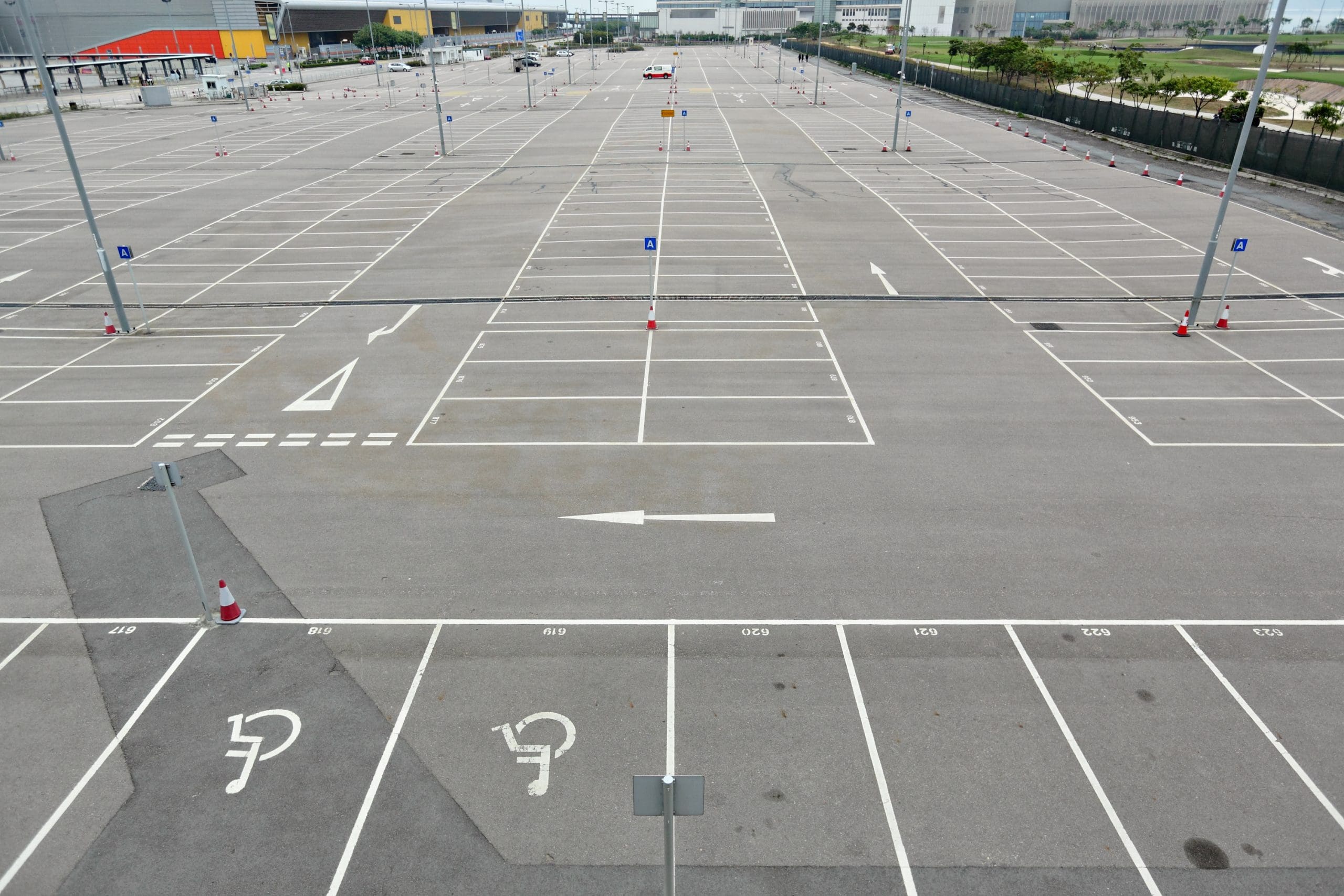
Getting disabled parking bay dimensions and markings right matters. Customers, staff and visitors who rely on blue badge spaces need consistent, compliant bays that are safe to use. Poorly sized bays, faded markings or missing symbols create frustration, risk non-compliance with guidance and harm your reputation. This guide explains the recommended dimensions, marking details and practical reasons to choose professional car park marking so you deliver accessible bays that last.
You may also find Car Park Lines Bournemouth: Clear, Durable Markings That Protect Your Site useful for related guidance.
UK guidance on disabled parking bay dimensions
The Department for Transport and local authorities follow common guidance for accessible parking. Typical recommendations for standard disabled bays are:
- Minimum bay width: 3.6 metres (including the access aisle). This allows space for wheelchair ramps and side transfer.
- Standard bay length: 4.8–5.0 metres, matching typical parking bay lengths used across car parks.
- Marked access aisle: at least 1.2–1.5 metres wide adjacent to the bay. In some designs a wider 2.4-metre shared access zone is preferred for enhanced manoeuvring space.
Note that these are practical, commonly adopted dimensions. Specific requirements can vary by local authority or building regulations, especially for public buildings, hospitals or transport hubs. For multi-space disabled bays or family-access spaces the layout may be larger to accommodate buggies or larger vehicles.
Markings and signage every disabled bay should have
Correct markings make a bay immediately recognisable and enforceable. A compliant disabled parking bay should include:
- Bold blue hatched background or blue border to distinguish the space from standard bays.
- White wheelchair symbol painted centrally within the bay, sized and positioned for clear visibility from above.
- Clear access aisle markings with diagonal hatching and boundary lines to prevent parking across the access space.
- Appropriate upright signage showing the blue badge symbol and any local time or permit restrictions.
Using high-contrast colours and reflective paints improves visibility in poor light. Durable thermoplastic or specialist line paint and regular maintenance keep the markings legible and enforceable, reducing disputes and improving safety.
Why professional marking beats DIY
It’s tempting to refresh disabled bays in-house, but professional car park marking offers several decisive advantages:
- Accuracy: laser-guided or stencil systems ensure exact bay widths, access aisles and symbol placement to match guidance.
- Durability: commercial paints, thermoplastic material or cold-applied plastics resist wear from traffic and weather longer than generic DIY paint.
- Compliance reassurance: experienced contractors understand local authority expectations and can advise on additional signage or sizes needed for your site.
- Minimal disruption: professionals plan work to avoid peak times and can complete markings quickly with less downtime for your car park.
If you already use a contractor for other car park work, such as line refreshing or surface repairs, bundling disabled bay marking with that work saves time and ensures a consistent finish across the whole site. See our car park line painting page for related services.
You may also find Car Park Lines Poole: Clear, Durable Markings That Improve Your Site useful for related guidance.
Common buyer concerns and answers
When commissioning disabled bay marking clients often worry about cost, disruption and long-term maintenance. Here are clear answers to those concerns:
- Cost: While professional marking costs more than basic DIY paint, you buy longevity. Durable markings require fewer repeat treatments, making them more cost-effective over several years.
- Disruption: Contractors schedule works to avoid peak periods and can deliver rapid application systems that cure quickly so spaces return to service fast.
- Compliance risk: A reputable contractor knows local standards and produces measurable, repeatable layouts that stand up to inspections and appeals.
- Maintenance: Ask for a maintenance plan or durable materials up front. Periodic cleaning and touch-ups keep bays visible and enforceable.
Practical use cases and benefits
Well-planned disabled parking bays help in a range of settings:
- Retail car parks: clear bays improve customer experience and reduce complaints from accessibility groups.
- Workplaces: accessible bays support staff retention and show your commitment to equality.
- Healthcare and public buildings: precise layouts aid fast patient access and meet stricter accessibility requirements.
- Housing developments: clear marking protects residents and visitors and supports planning conditions.
Beyond compliance, professionally marked bays reduce insurance and reputational risks by lowering the chance of accidents or access disputes.
How to proceed: planning, marking and upkeep
Follow these steps to deliver reliable disabled parking bay dimensions and markings on your site:
- Survey: measure existing bays, footfall and vehicle types to determine how many accessible spaces you need and the best locations for them.
- Design: choose bay sizes and access aisles that match guidance and the needs of your users. Include signage positions in the plan.
- Material selection: pick durable paints or thermoplastic materials suitable for your surface and traffic levels.
- Professional application: use a specialist to lay out, mark and finish bays precisely. They will advise on curing times and traffic management during works.
- Maintenance schedule: plan regular inspections and touch-ups. Consider an annual refresh for high-traffic sites.
If you need reliable marking or a full car park refresh, our team can survey your site, recommend compliant bay dimensions and deliver long-lasting results. For more on related services, see our car park marking and car park line painting pages.
Getting disabled parking bay dimensions and markings right protects users, reduces complaints and keeps your site compliant. Professional marking is an investment that pays back through durability, reduced disruption and better accessibility. If you’d like expert help planning or marking accessible bays, contact us to arrange a site survey and quotation.
You may also find White Lining in Bournemouth: Clear, Durable Markings for Safer Parking useful for related guidance.
Frequently asked questions
What are the standard dimensions for a disabled parking bay in the UK?
A commonly adopted layout uses a bay width of around 3.6 metres (including the access aisle) and a length of 4.8–5.0 metres, with the access aisle at least 1.2–1.5 metres wide. Specific requirements can vary by local authority or building regulations, so always confirm with the relevant guidance for your site.
Do disabled bays need blue markings and a wheelchair symbol?
Yes. Accessible bays should be visually distinct with blue paint or a blue border, a clearly painted white wheelchair symbol, and properly hatched access aisles. Upright signage indicating blue badge use and any restrictions is also required to make the space enforceable.
How long do professional car park markings last?
Longevity depends on materials and traffic. High-quality thermoplastic or specialised cold-applied plastics can last several years under normal traffic, while commercial line paints typically need touching up every 1–3 years. Regular maintenance extends the effective life of markings.
Can I mark disabled bays myself or should I hire professionals?
While small touch-ups are possible in-house, professional contractors deliver precise layouts, durable materials and minimal disruption. They can also advise on local compliance and provide maintenance plans. For larger sites or where compliance is critical, hiring professionals is recommended.