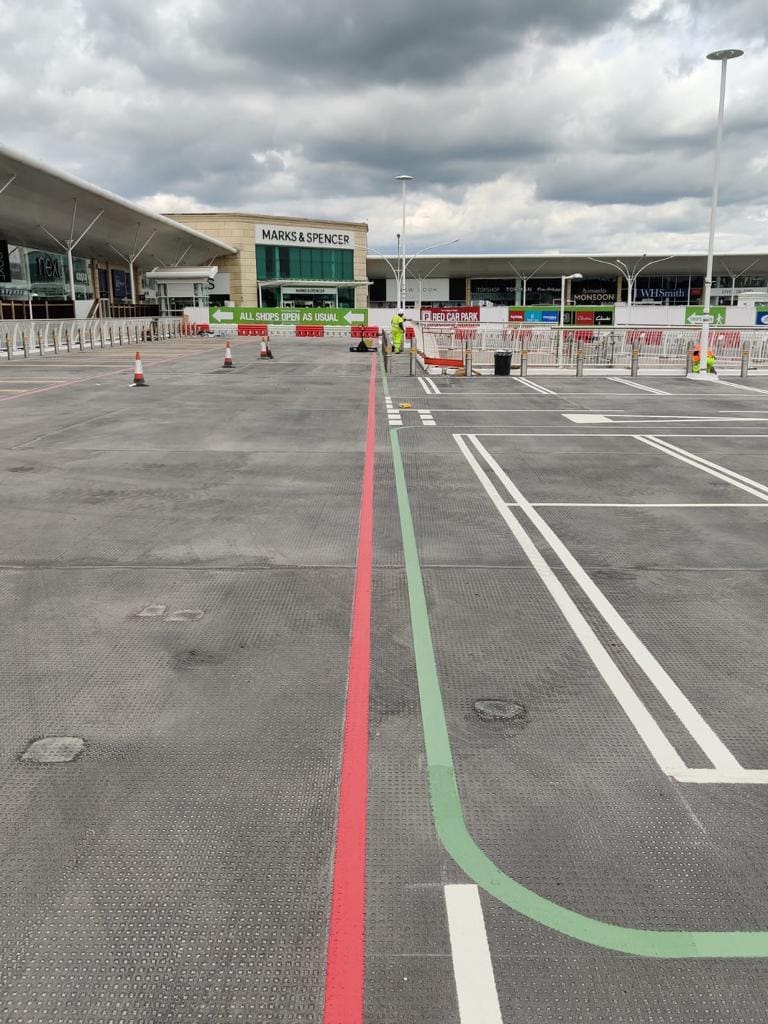
Warehouse managers face constant pressure to reduce accidents, improve throughput and meet safety regulations. This guide to warehouse line marking, covering colour codes, walkways and layouts, explains what markings you need, why they matter and how a professional white-lining service can deliver long-lasting, low-disruption results that protect staff and speed operations.
You may also find Thermoplastic vs paint road markings: which is right for your car park? useful for related guidance.
Why clear warehouse line marking matters
Poor or faded markings increase collisions, cause delays and can lead to costly non-compliance with health and safety rules. Clear, consistent line marking defines vehicle routes, pedestrian walkways, storage zones and hazard areas so staff make fewer mistakes and supervisors can enforce safe practice. Investing in quality markings is an easy way to reduce downtime, minimise insurance risk and show auditors you take workplace safety seriously.
Colour codes: what each marking should mean
Using standard colour codes across your site removes ambiguity. While exact schemes can vary by company, the following practical system is widely recommended and simple for staff to learn:
- Yellow — general traffic lanes and aisle centres for forklifts and vehicles. High-visibility and draws attention to moving traffic.
- White — parking bays, rack access lines and pallet positions. Clean white lines help with picking accuracy and stacking discipline.
- Green — designated pedestrian walkways and safe zones. Use green with contrasting edge lines for maximum clarity.
- Red — fire exits, fire-fighting equipment zones and strict no-parking areas. Red signals immediate prohibition.
- Blue — specialist areas such as maintenance bays, first aid points or QC stations.
- Black/Yellow (Hatched) — hazard areas or zones around machinery where extra caution is required.
Standardising colours across multiple sites makes training simpler and helps temporary staff understand quickly. If your operations require a bespoke scheme, a professional line marker can advise on regulatory expectations and best practice.
Designing safe walkways and crossings
Well-designed walkways protect staff and keep goods moving. When planning pedestrian routes, consider sightlines, crossing points and the natural flow of foot traffic. Use green walkways with white edging or chevrons at crossings to indicate priority changes. Where pedestrians cross vehicle routes, add high-visibility crossings and, where possible, install physical separation such as bollards or kerbs.
- Keep walkways at least 1m wide for single-file walking; widen them where foot traffic is heavy.
- Mark crossings with a contrasting block pattern or zebra-style markings to slow vehicles.
- Use directional arrows and signage at intersections to prevent bottlenecks.
- Ensure pathways avoid blind spots near racking; fit mirrors or sensors where necessary.
Practical design reduces near-misses and improves morale: staff feel safer and supervisors find it easier to enforce rules.
You may also find Car Park Lines Bournemouth: Clear, Durable Markings That Protect Your Site useful for related guidance.
Layout planning: make space work harder
Line marking should reflect how you use space. A good layout balances safe circulation with efficient storage and picking. Start by mapping typical traffic flows — inward goods, picking routes, dispatch — and mark permanent lanes with durable yellow lines. Reserve white-lined pallet positions for fixed storage, and use numbering or lettering within those bays for fast scanning and stock checks.
- Place high-turnover stock closest to dispatch and mark fast-pick lanes clearly.
- Create temporary marking solutions for seasonal or evolving layouts to reduce rework costs.
- Combine painted lines with numbered bays or floor signage to speed training and audits.
Good markings save time every day: even small gains in pick-path efficiency compound into significant productivity improvements.
Choosing the right materials and arranging installation
Not all paints are equal. For busy warehouses you need abrasion-resistant, fast-curing products or thermoplastic for extreme durability. Epoxy paints and specialist line marking machines produce crisp edges that last far longer than brush-painted lines. When selecting a contractor, look for:
- Experience in industrial settings and knowledge of safety colour standards;
- Options for low-odour, fast-dry materials to minimise downtime;
- Capability to work out-of-hours or in phased plans to avoid disrupting shifts;
- Clear warranties and a maintenance plan for periodic re-marking.
Common objections are concerns about cost and disruption. A professional provider will present a staged plan, quote for long-life materials that reduce lifetime spend, and offer night or weekend work to keep your operation running. That makes the upfront cost an investment in safety and efficiency, not simply an expense.
Why use a specialist line marking service?
Using experienced contractors means crisp, accurate lines laid quickly and safely. Specialists bring machinery that gives consistent widths and straight edges and can advise on anti-slip coatings, reflective beads for low-light areas and thermoplastic for high-wear zones. They can also help with compliance documentation if you need evidence of safety measures for insurers or auditors.
If you manage car park areas as well as warehouse floors, consider linking to existing services for external marking and thermoplastic advice to create a consistent site-wide approach. For example, our site contains expert guides on thermoplastic vs paint and car park marking options that complement internal floorline schemes.
Choosing a local, reputable team reduces travel time, ensures quicker response for repairs and makes it easier to arrange phased work around your shifts.
Next steps: assessing your site and getting a quote
Start with a simple audit: photograph faded lines, map traffic flows and list high-risk areas. Use those notes to ask contractors for a phased proposal that includes recommended colours, materials and a schedule that suits your operation. A good supplier will offer free site visits, show previous work and provide a clear quote that separates materials, labour and any aftercare maintenance.
Ready to improve safety and efficiency with professional warehouse line marking? Contact a specialist who understands industrial environments and can plan around your schedule. If you want examples of external marking and thermoplastic options that might also benefit your site, see our articles on car park marking and car park lines for ideas you can apply indoors and out.
Clear, consistent markings pay back quickly: fewer accidents, faster picking and a workplace that looks organised and compliant. Arrange a survey today and turn your floor into a safer, smarter asset.
You may also find Car Park Lines Poole: Clear, Durable Markings That Improve Your Site useful for related guidance.
Frequently asked questions
What colours should I use for warehouse floor markings?
A practical scheme is: yellow for vehicle lanes, white for pallet bays and storage positions, green for pedestrian walkways, red for fire-fighting and emergency no-parking zones, blue for specialist areas and black/yellow hatching for hazards. Consistency across sites makes training easier.
How durable are line markings and which materials last longest?
Durability depends on traffic and material. Thermoplastic and specialist epoxy or polyurethane paints with anti-abrasion properties last longest in heavy-use areas. Regular maintenance and choosing materials suitable for forklift traffic will extend lifespan and reduce lifetime costs.
Can you install markings without disrupting warehouse operations?
Yes. Experienced contractors offer phased installations, night or weekend work and fast-curing materials to keep disruption minimal. A staged plan lets you keep critical operations running while improving safety zone by zone.
Do floor markings help with regulatory compliance?
Clear, well-documented line markings support compliance with health and safety expectations by defining walkways, exclusion zones and emergency routes. Professional installers can provide guidance and documentation to demonstrate reasonable steps to reduce risk.