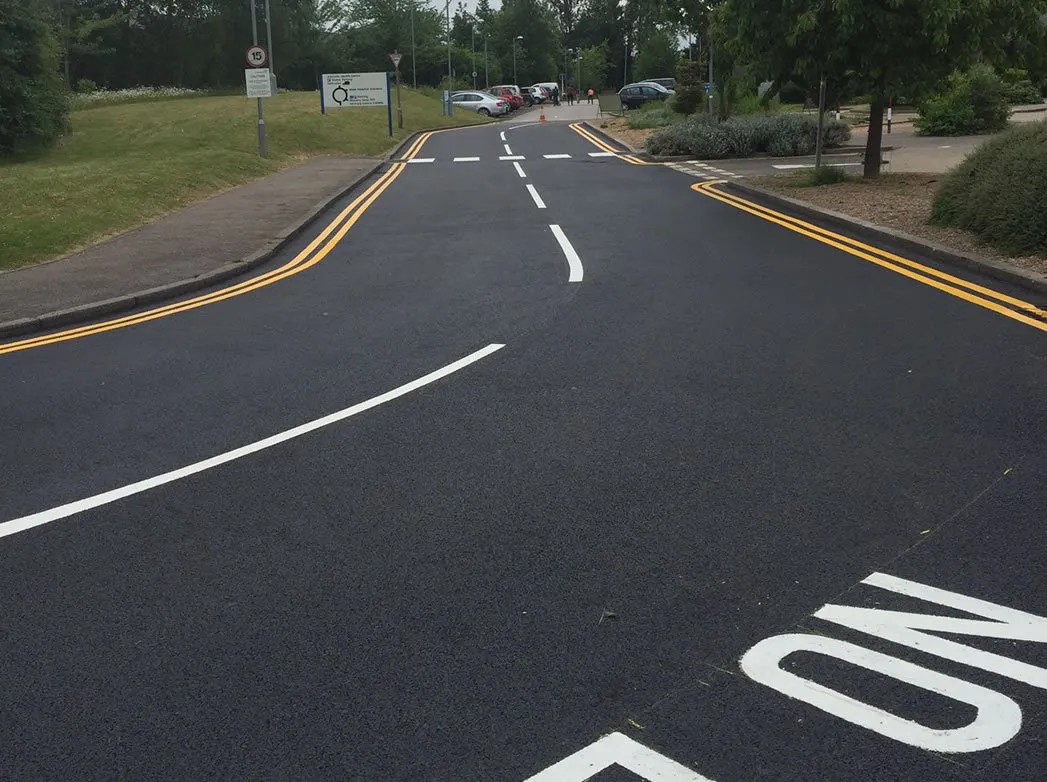
White lining has a history that goes back to the 1920s. With more automobiles and busier roads in America, the white lines painted in the center of the roads made sense—it symbolised the separation of oncoming traffic. However, with many cars all on the road at the same time, subsequent markings became a requirement.
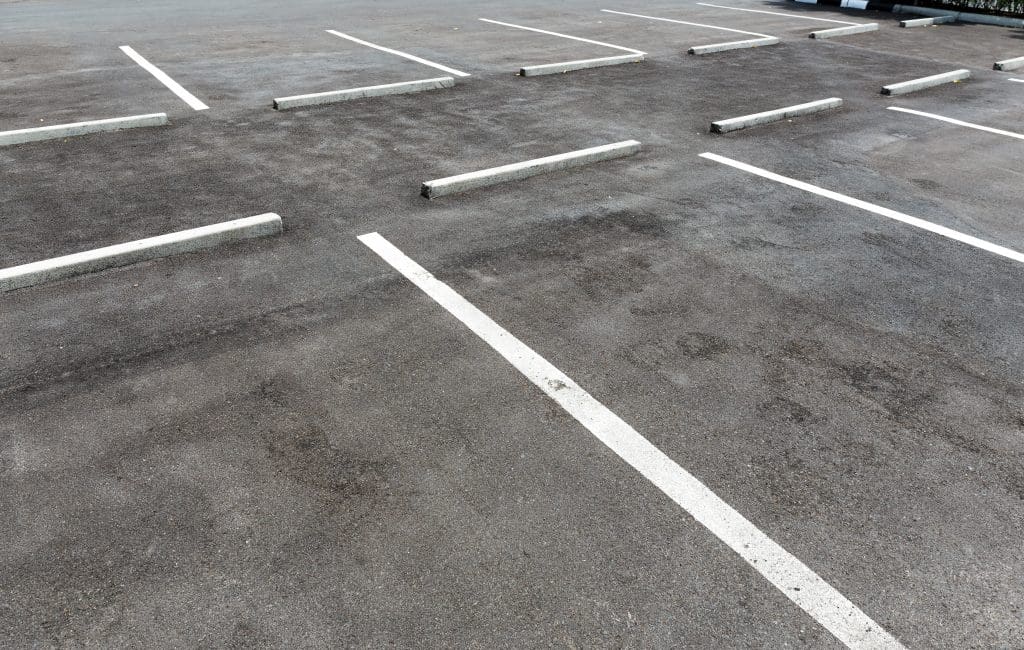
Today’s white lines edge the road, separate lanes and no-go zones, crosswalks and biking areas, no parking spaces, and direct complicated intersections (and some mini-roundabouts). They’ve become essential in zero visibility areas.
Why White Lines on Roads are Essential for Road Safety:
White lines on the road are an integral part of the driving experience. They indicate direction, help maintain a steady pace across traffic, and reduce the potential for accidents. Reasons white lines on the highway are important include:
Assistance in Control and Direction with a Presence
White lines help regulate traffic. They show people where they need to be. They keep people in their designated lanes. They help people navigate complex intersections and roundabouts so they aren’t derailed in the middle of their journey.
Enhanced Safety and Visibility
White lines are mentioned because they contrast with the blacktop and serve as dependable separators—even at night when a blare of oncoming headlights can trick one into thinking they’re heading in the right direction; the distinction of the white line makes it apparent.
Why We Need White Lines for Safety and Awareness
White lines are lanes and direction; if the line is up and down, it splits the road; if it’s sideways, it indicates where it’s going. Thus, white lines are in place to avoid head-on collisions that people cannot see where they’re crossing the center line into oncoming traffic. In addition, white lines allow for traffic to flow properly and safely without unnecessary intersections.
White Lines Provide Guidance and Caution
White lines indicate where one is going at a red light, leading into where one should be going straight or turning. In addition, white lines are cautions that guess where the problem is— a turn, a grade, an animal crossing.
Bournemouth White Lining understands that white lines are essential to your journey and navigation. That’s why we offer a full complement of road marking services to give you the organized road experience you’re looking for. From professional quality, technology-driven applications to water-based, environmentally friendly compounds, we use the appropriate white lines and line application to guarantee effective white line transportation.
How Lines on Roads are Created
White lines appear on the street through specific means. There are people trained to create lines as such and using these specific tools subsequently, after a quasi-comprehensive process, in the future, to eschew them. Lines are created by:
Painting
Lines are created by painting. For example, the white lines that you see are painted by line painting professionals using automotive paint so that it dries quickly and is weather resistant.
Cutting
Lines are created by cutting. For example, when lines need to be erased, line-cutting professionals use cutting blades to score the lines and scrape them up. Subsequent Steps–Application–Application of the white line paint occurs through various technology on the road. For example, a road marking machine creates the line via measurement and designation and ideally, a permanent, bright, clear line when it is finished.
Drying
White line paint requires a drying period with non-surrounding traffic so that the new paint does not get disturbed while it’s wet.
Final Adjustments
The final step of this process is for the road marking crew to assess the white lines for correct positioning and make adjustments if need be.
Bournemouth White Lining uses the newest technology and environmentally safe products to ensure that the white lining on your road will last. The professionally trained and experienced staff at Bournemouth White Lining work efficiently and dependably in the field, and every job is charged per customer specification, ensuring a quality job each time.
What White Lines on Roads Are
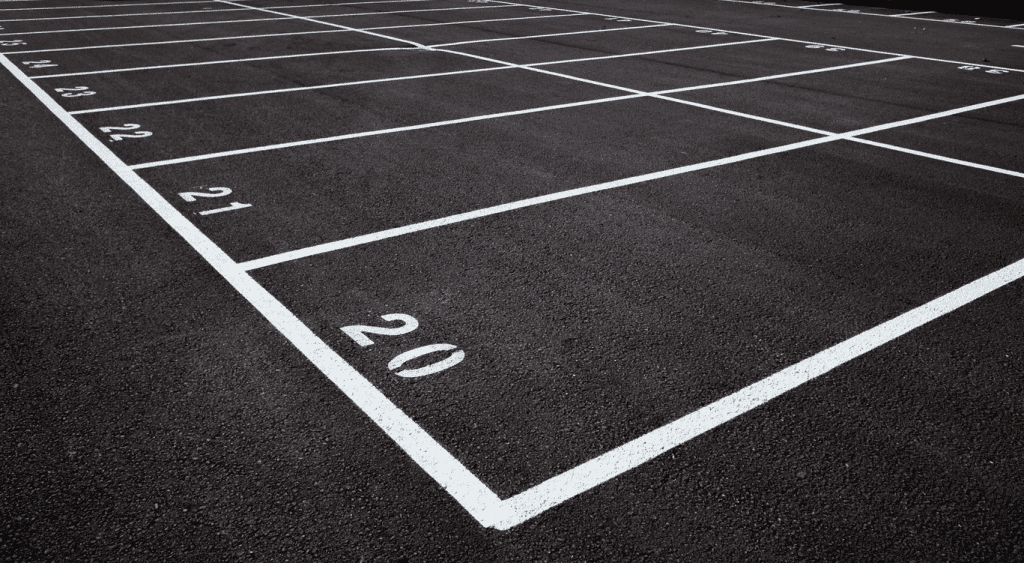
White line road markings are thermoplastic strips, meaning heated plastic that is either spray painted down or cast in a formation and rendered workable. There is no specific duration of life for road markings, but generally, they last for years as they fade until needing a repaint.
Road Paint Width, Length, and Specs
Road white lines are made to a specific width and length. These are standardized and code-approved for consistent driving.
Road Paint Longevity
Road white lines are intended to remain permanent. From paint to application, longevity is considered from the beginning.
Road Paint Maintenance
Road white lines require maintenance. Whether it’s re-striping after a certain amount of time or repairing abrasions from subsequent accidents, white lines need attention over time. Ultimately, road white lining means safety and stability, guiding and reducing stress along the operator’s course.
Bournemouth White Lining is a contractor for all white lining services. We specialize in application, upkeep, and repair of any road white lining. Our trained technicians use professional-grade materials and industrial-sized machinery to guarantee that every road white lining is safe, effective, compliant, and durable. Reach out today for all your white lining needs!
Why are there white lines on the road?
White lines on the road control traffic. They separate lanes where drivers are expected to operate and where they are not, and they increase safety by providing distinguishable separations and directional offerings.
How are white lines applied?
Road white lines are usually applied through painting, using specialised equipment to ensure precision and long lasting so the lines dont fade.