
Anti-Skid Surfacing
High-friction surfacing for ramps, junctions, crossings and car parks
Anti-skid surfacing across Bournemouth and Dorset
Anti-skid surfacing, also called high-friction surfacing, is a textured layer bonded onto tarmac, concrete or other paved surfaces to give tyres and shoes more grip. It shortens stopping distances where vehicles brake hard and cuts the risk of slips where people walk, especially in wet or icy weather.
Bournemouth White Lining lays anti-skid surfacing on roads, ramps, junction approaches, crossings and car parks across Bournemouth, Dorset and the surrounding counties, and we can re-mark the lines on top in the same job.
How high-friction surfacing works
A resin binder is spread over the prepared surface and a hard, sharp aggregate is scattered into it. Once the resin cures, the loose stone is swept away, leaving a rough, hard-wearing finish that tyres grip even when the road is wet.
The aggregate and binder are chosen to suit the traffic. Busy junctions and steep ramps where vehicles brake hard need a tougher system than a walkway or a quiet car park, and choosing the right one is what makes it last. Coloured surfacing, such as red or buff, can also mark out an area, for example a crossing approach, a bus lane or a hazard zone.
Where anti-skid surfacing helps
- Car park entrances and ramps, where vehicles brake and accelerate sharply
- Approaches to junctions, roundabouts and pedestrian crossings
- Bends and steep slopes on access roads and estate roads
- Loading bays and walkways, to reduce slips
- Driveways and shared surfaces
How long it lasts
Depending on the traffic and the system used, good anti-skid surfacing typically lasts 3 to 10 years. Heavily used areas laid with a durable binder and larger aggregate last longer with routine checks and patch repairs where wear shows first.
For lines and symbols on top, see our thermoplastic road markings.
How an anti-skid job works
- Tell us about the area. Call 01202 548 102 or use the form below. Photos, the size of the area and how it's used help us price it.
- We recommend a system and give you a price. We'll match the binder and aggregate to the traffic and the slope.
- We prepare the surface. Surface preparation is where most failures start, so we make sure it's clean, dry and sound, and plan for drainage, before anything is laid.
- We lay the surfacing. Once it has cured and the loose stone is swept up, the area can reopen. Where lines are needed on top, we re-mark them, so the whole job is done in one visit.
Pairing anti-skid surfacing with road studs gives drivers grip and guidance at night. Our guide to anti-skid surfacing and road studs explains how the two work together.
Recent projects
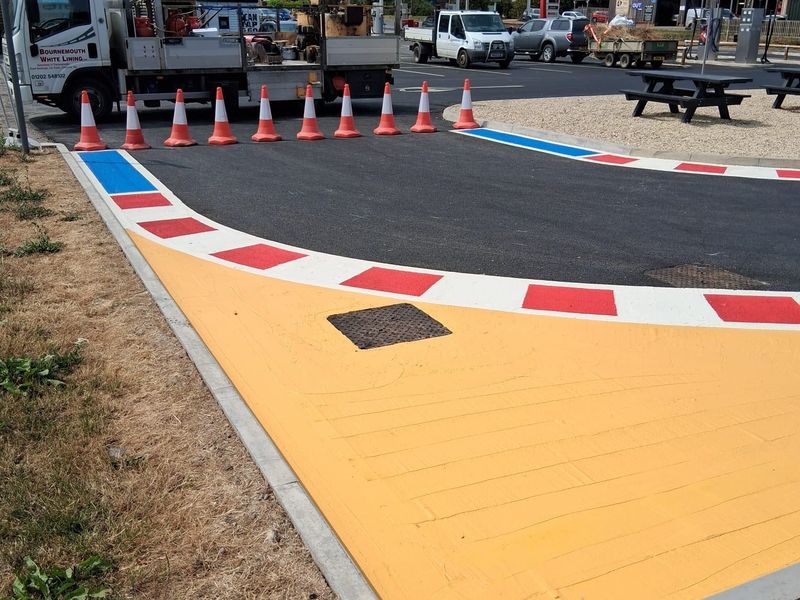
Riverside Garage, West Stour
A coloured racetrack with red and white kerb markings, road edge markings and grid line-up markings.
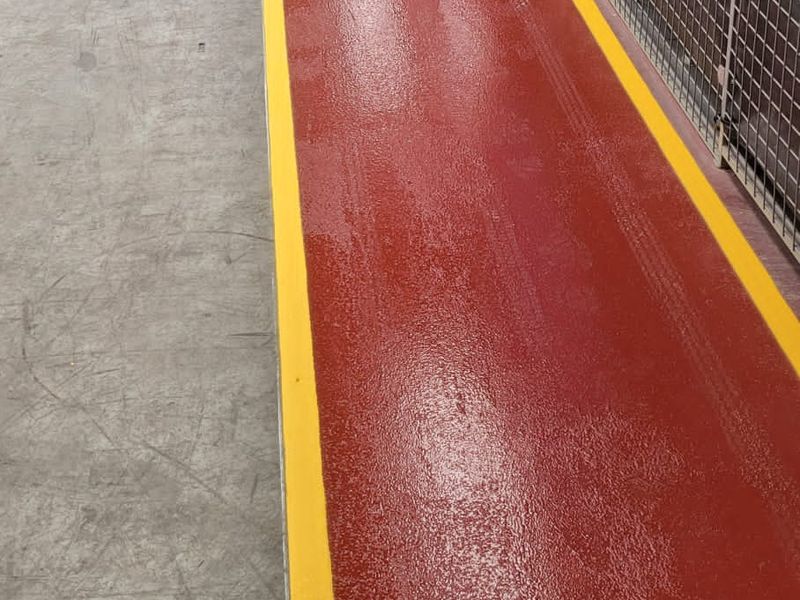
Tidworth Barracks
Internal floor painting, with a red walkway and yellow edge lines.
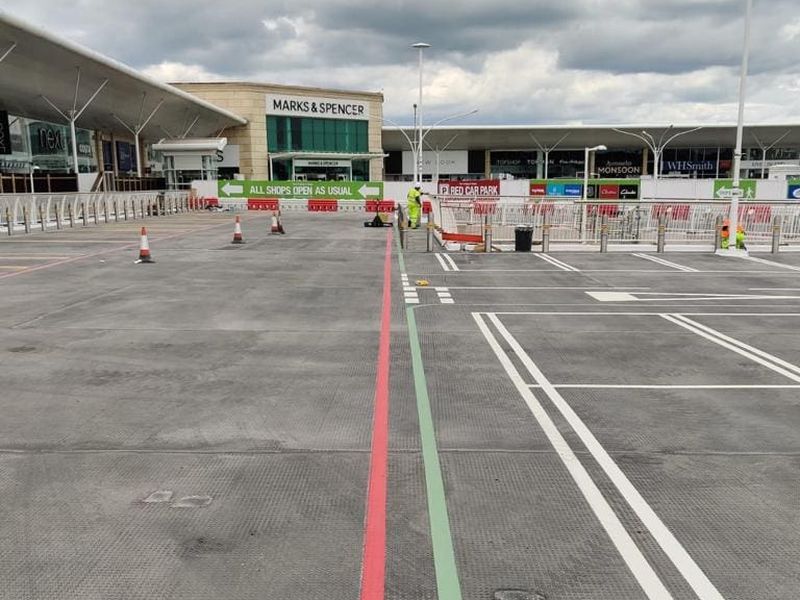
Kier at Castlepoint, Bournemouth
Parking bays, disabled bays, coloured walkways, a red fire route, arrows and hatching.
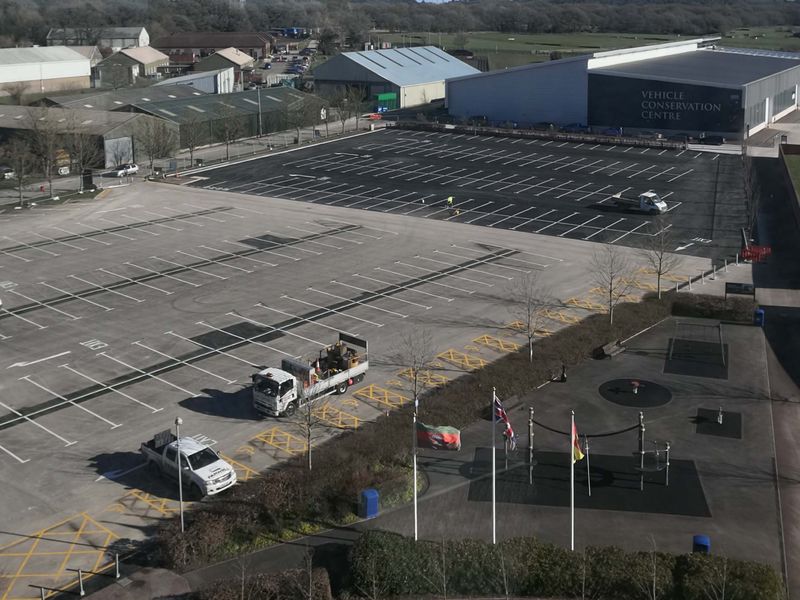
The Tank Museum, Bovington
240 parking bays, 15 disabled bays, double yellow lines, arrows and hatching.
Why choose Bournemouth White Lining
- More than 25 years of line marking in Bournemouth and the surrounding counties
- Markings that meet UK requirements, including the Traffic Signs Regulations and General Directions (TSRGD) and British Standards BS EN 1436 and BS EN 1871
- Accreditations including CHAS, Constructionline, Safecontractor, SMAS and ISO 9001
- Clients including Bournemouth Airport, AFC Bournemouth, Tesco, Marks & Spencer and Morgan Sindall
- Anti-skid surfacing and the line markings on top from one team, in one visit
We're based in Throop, Bournemouth, and cover Poole, Dorset, Hampshire, Wiltshire and Somerset, including Weymouth, Southampton, Salisbury, Portsmouth and Yeovil.
NEED MORE GRIP ON A RAMP, JUNCTION OR CROSSING?
Anti-skid surfacing questions
What is anti-skid surfacing?
A textured layer of hard aggregate bonded with resin onto tarmac, concrete or other paved surfaces. It gives tyres and shoes more grip, shortening stopping distances and reducing slips, especially in the wet.
Is anti-skid surfacing the same as high-friction surfacing?
Yes, the terms are used for the same thing: a resin binder with a hard, sharp aggregate that gives a high-grip finish.
How long does anti-skid surfacing last?
Typically 3 to 10 years, depending on the traffic and the system used. Heavily used areas laid with a durable binder and larger aggregate last longer with routine checks.
Can anti-skid surfacing go over existing line markings?
It's possible, but it's better to lay the surfacing first and re-mark the lines on top, so the markings stay clear and last. We can do both in the same job.
Where is anti-skid surfacing most useful?
Car park ramps and entrances, approaches to junctions, roundabouts and crossings, bends and slopes on access roads, and walkways or loading bays where people might slip.
Which areas do you cover?
We're based in Bournemouth and cover Poole, Dorset, Hampshire, Wiltshire and Somerset, including Weymouth, Southampton, Salisbury, Portsmouth and Yeovil.