
Thermoplastic Road Markings
Hot-applied lines, symbols and lettering for roads, car parks and playgrounds
Thermoplastic road markings across Bournemouth and Dorset
Thermoplastic is the material most road markings are laid in. It's heated, laid hot and sets into a thick, hard-wearing line that stands up to traffic and weather far better than paint, and glass beads in the mix help it reflect headlights at night.
Bournemouth White Lining has been laying thermoplastic markings for more than 25 years, on roads, access roads, car parks, school playgrounds and commercial yards. We lay hot-applied lines and pre-formed thermoplastic symbols, and we'll recommend paint where it's the better fit.
What thermoplastic is
Thermoplastic is a factory-mixed material made of resin, pigment and fillers, often with glass beads mixed in. It's solid when cold. On site it's heated until it melts, then laid onto a clean, dry surface, where it bonds to the road as it cools and hardens.
The result is a line typically 2 to 3mm thick, compared with the thin film left by paint. That extra thickness is why thermoplastic lasts longer under tyres, keeps its crisp edges and stays bright and reflective for longer.
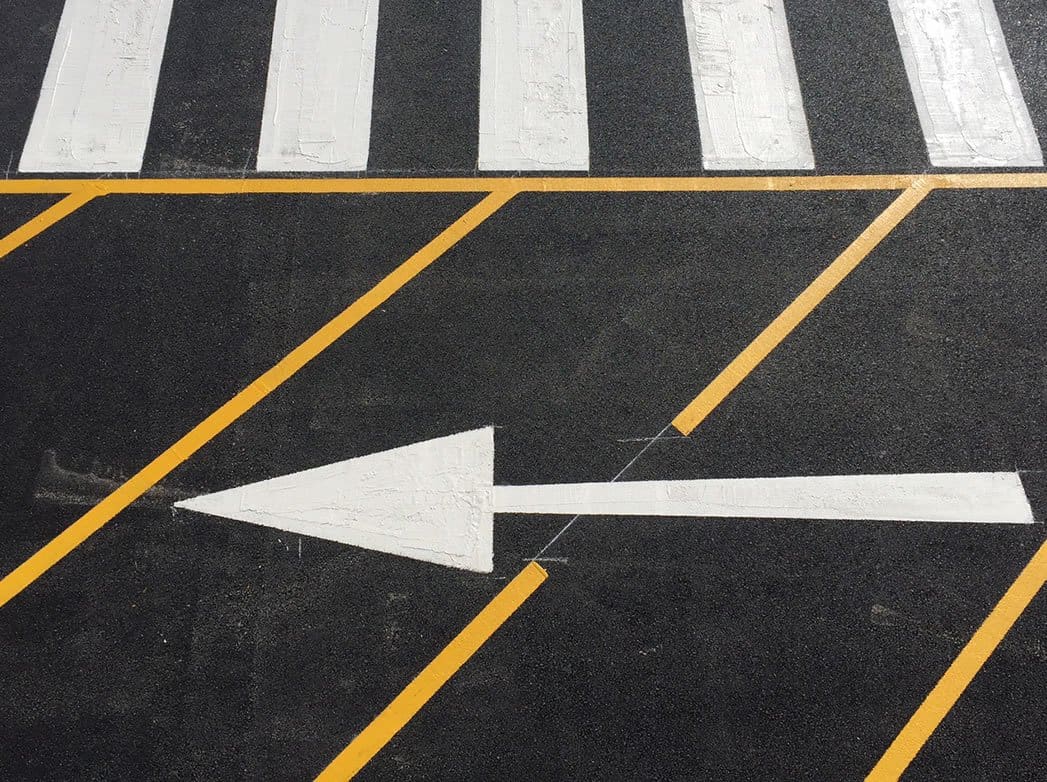
Hot-applied lines and pre-formed symbols
We use thermoplastic in two forms, and most jobs use both.
Hot-applied thermoplastic
Melted on site and laid as continuous lines. We use it for:
- centre lines, edge lines and lane lines
- give way and stop lines at junctions
- parking bays, hatching and keep clear areas
- double yellow lines and fire routes
- zebra crossings and pedestrian walkways
Pre-formed thermoplastic
Ready-made shapes heated onto the surface, so every symbol comes out the same shape and size. We use it for:
- direction arrows and words such as SLOW and NO ENTRY
- disabled bay and EV charging symbols
- cycle symbols
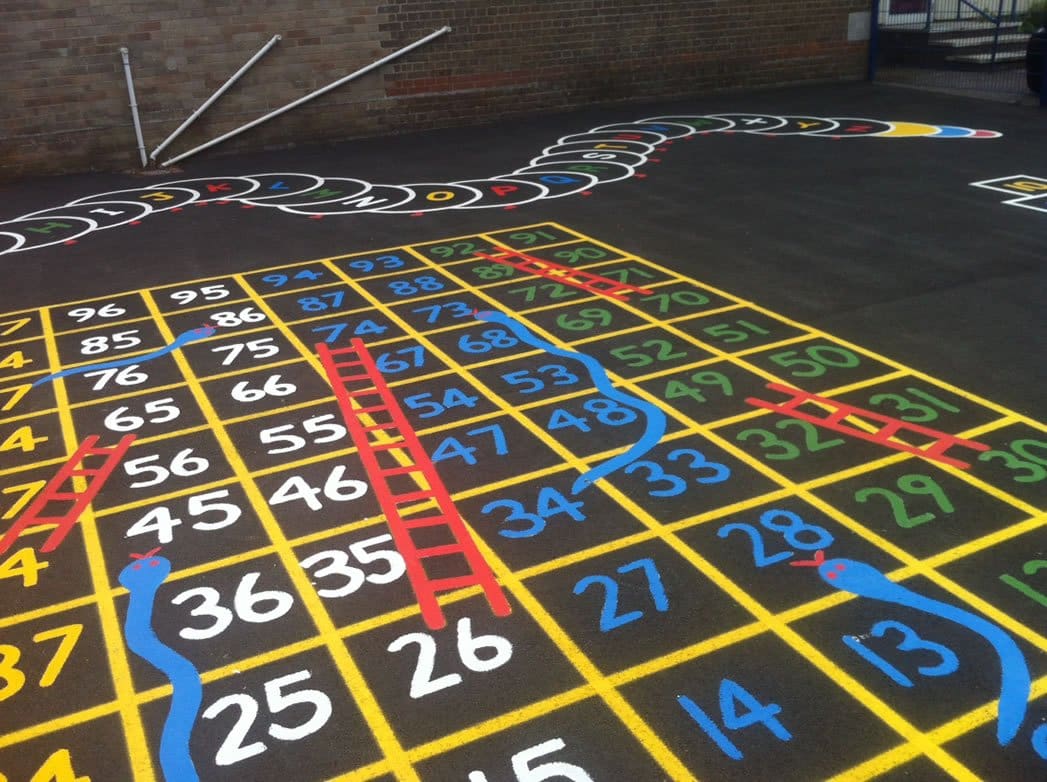
- playground games, numbers and letters
- custom logos and lettering
Where we lay thermoplastic
- Roads and access roads. Centre lines, junctions, crossings and cycle lanes on new and relaid roads. See our road markings service.
- Car parks. Busy car parks, retail parks and delivery yards, where markings take constant wear from cars, HGVs and forklifts. See our car park line marking service.
- School playgrounds. Most playground markings are thermoplastic, from hopscotch and snakes and ladders to running tracks. See our playground markings service.
- EV charging bays. Coloured bays, symbols and lettering. See our EV charging bay markings.
- Commercial yards. Loading bays, walkways and fire routes, covered in our guide to loading bay and fire route markings.
How long thermoplastic lasts, and what it costs
In a busy car park, thermoplastic markings typically last 3 to 7 years before they need renewing, depending on the traffic and the condition of the surface. Paint on the same site may need redoing far sooner.
Thermoplastic costs more to lay than paint. Over the life of the markings it's often the cheaper option, because there are fewer repaints, fewer closures and less disruption. The price of a job depends on:
- how many metres of line and how many symbols are needed
- the condition of the surface, and any old markings to remove first
- when the work can be done around your opening hours or traffic
Paint still has its place, for quieter car parks, temporary layouts and sports courts, and our page on white lining paint covers the paints we use. Our guide to thermoplastic vs paint road markings compares the two in detail.
How a thermoplastic job works
- Tell us about the site. Call 01202 548 102 or use the form below. Photos, a plan or a list of the markings you need help us price it.
- We assess the area and give you a price. We'll recommend thermoplastic, paint or a mix, and agree timings that suit your site.
- We prepare the surface. Thermoplastic needs a clean, dry surface to bond to. If the layout is changing, we remove the old markings first.
- We lay the markings. We set out the lines accurately and lay the thermoplastic hot. It needs a short time to cool, so on a busy site we work in phases to keep disruption to a minimum.
Recent projects
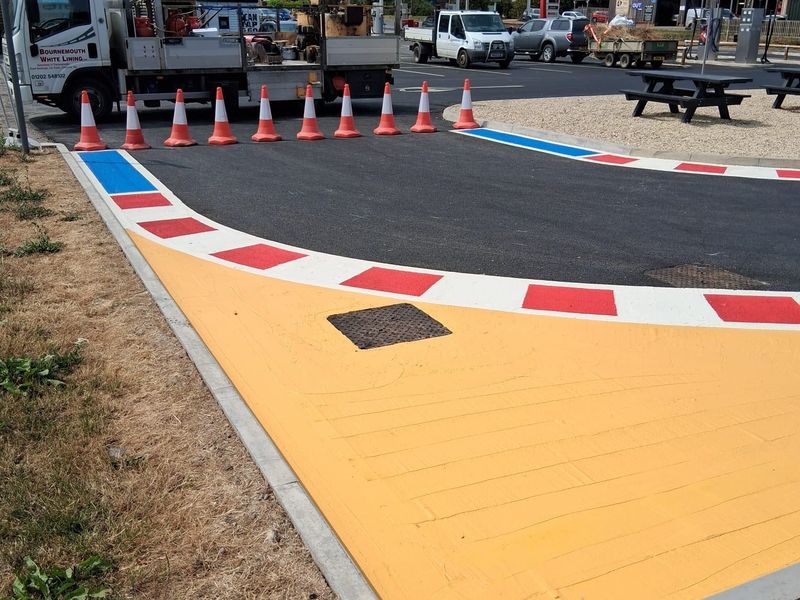
Riverside Garage, West Stour
A coloured racetrack with red and white kerb markings, road edge markings and grid line-up markings.
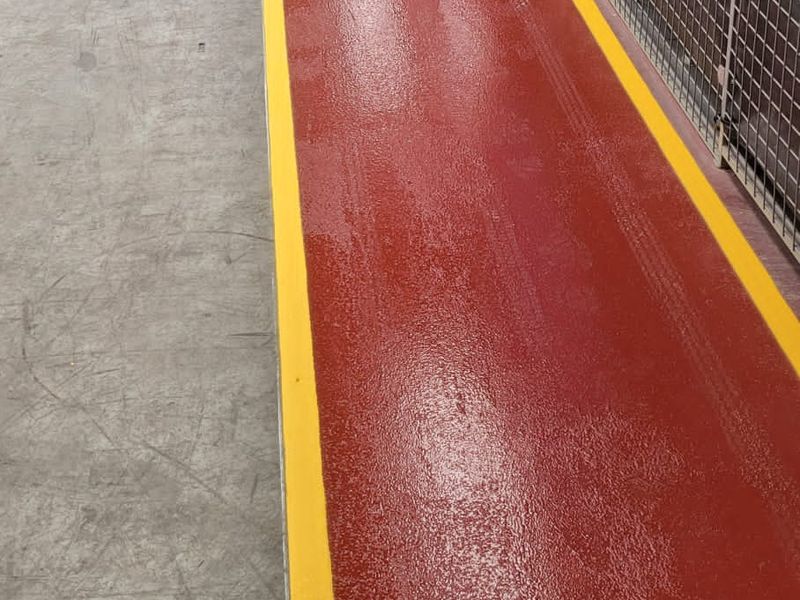
Tidworth Barracks
Internal floor painting, with a red walkway and yellow edge lines.
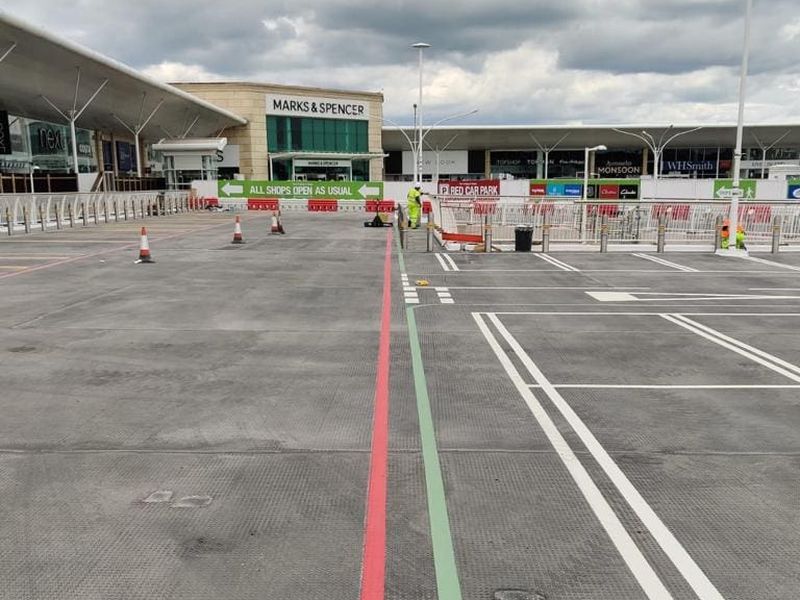
Kier at Castlepoint, Bournemouth
Parking bays, disabled bays, coloured walkways, a red fire route, arrows and hatching.
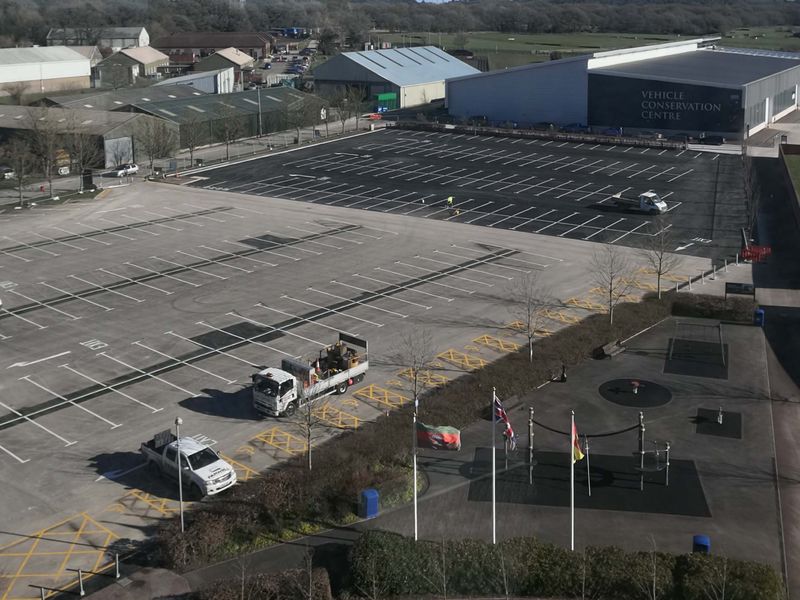
The Tank Museum, Bovington
240 parking bays, 15 disabled bays, double yellow lines, arrows and hatching.
Why choose Bournemouth White Lining
- More than 25 years of line marking in Bournemouth and the surrounding counties
- Markings that meet UK requirements, including the Traffic Signs Regulations and General Directions (TSRGD) and British Standards BS EN 1436 and BS EN 1871
- Accreditations including CHAS, Constructionline, Safecontractor, SMAS and ISO 9001
- Clients including Bournemouth Airport, AFC Bournemouth, Tesco, Marks & Spencer and Morgan Sindall
- Hot-applied and pre-formed thermoplastic, as well as paint, so each part of a job gets the right material
We're based in Throop, Bournemouth, and cover Poole, Dorset, Hampshire, Wiltshire and Somerset, including Weymouth, Southampton, Salisbury, Portsmouth and Yeovil.
NEED HARD-WEARING THERMOPLASTIC MARKINGS?
Thermoplastic road marking questions
What are thermoplastic road markings?
Thermoplastic is a factory-mixed material of resin, pigment and fillers, often with glass beads. It's heated until it melts, laid hot onto the surface and sets as it cools into a thick, hard-wearing line, typically 2 to 3mm deep. Most road markings in the UK are thermoplastic.
How long do thermoplastic road markings last?
In a busy car park, thermoplastic markings typically last 3 to 7 years before they need renewing, depending on the traffic and the condition of the surface. They last much longer than paint on the same site.
Is thermoplastic better than paint?
For roads, busy car parks and yards, usually yes: it's thicker, lasts longer and reflects better at night. Paint costs less up front and suits quieter car parks, temporary layouts and sports courts. We'll recommend the right material when we price the job.
What is pre-formed thermoplastic?
Pre-formed thermoplastic comes as ready-made shapes, such as arrows, words, disabled and EV symbols and playground games. They're heated onto the surface, so every symbol comes out the same shape and size.
Do your thermoplastic markings meet UK standards?
Yes. Our markings meet UK requirements, including the Traffic Signs Regulations and General Directions (TSRGD) and British Standards BS EN 1436 and BS EN 1871.
Which areas do you cover?
We're based in Bournemouth and cover Poole, Dorset, Hampshire, Wiltshire and Somerset, including Weymouth, Southampton, Salisbury, Portsmouth and Yeovil.