
Road stud installation across Bournemouth and Dorset
Road studs, often called cat's eyes, are small markers set into or onto the road that light up in headlights. They show drivers where the lanes and edges are at night and in rain, when painted lines are hard to see, and drivers feel them through the tyres if they drift over a line.
Bournemouth White Lining installs road studs alongside the line markings we lay on roads, access roads, estates and car parks across Bournemouth, Dorset and the surrounding counties, so the studs and the lines are set out together.
Types of road stud
Reflective road studs
The most common type. Reflective lenses send headlight beams back towards the driver, so the stud shines brightly without needing any power. They suit centre lines, lane lines and road edges.
Solar road studs
Solar studs charge in daylight and light up on their own after dark, so they're visible before headlights reach them. They're useful on dark bends, unlit access roads and car park routes.
Low-profile and flush studs
Where cyclists, wheelchairs or pedestrians cross the line, low-profile or flush-mounted studs keep the route smooth while still marking it clearly.
What the colours mean
On the road, the colour of a stud tells drivers where they are. Rule 132 of the Highway Code sets out the colours:
- White: lanes or the middle of the road
- Red: the left edge of the road
- Amber: the central reservation of a dual carriageway or motorway
- Green: the edge of the main carriageway at lay-bys and slip roads
- Green and yellow: temporary lane changes, such as at roadworks
On private roads and car parks, using the same colours means drivers understand them straight away. Our guide to what every white line on the road means covers the lines the studs sit beside.
Where road studs help
- Centre lines and edges on access roads, estate roads and private roads
- Bends, junction approaches and narrowings, where drivers need warning at night
- Car park entrances, exits and one-way routes
- Ramps and roundabouts, alongside anti-skid surfacing
- Cycle lanes and shared surfaces, using low-profile studs
How we install them
Depending on the type, studs are either bonded to the surface or set into a hole cut into it. Each one has to be positioned to match the line it sits beside and sited so it doesn't become a hazard for cyclists or pedestrians. Fitting studs at the same time as new road markings means one visit and one closure rather than two.
Recent projects
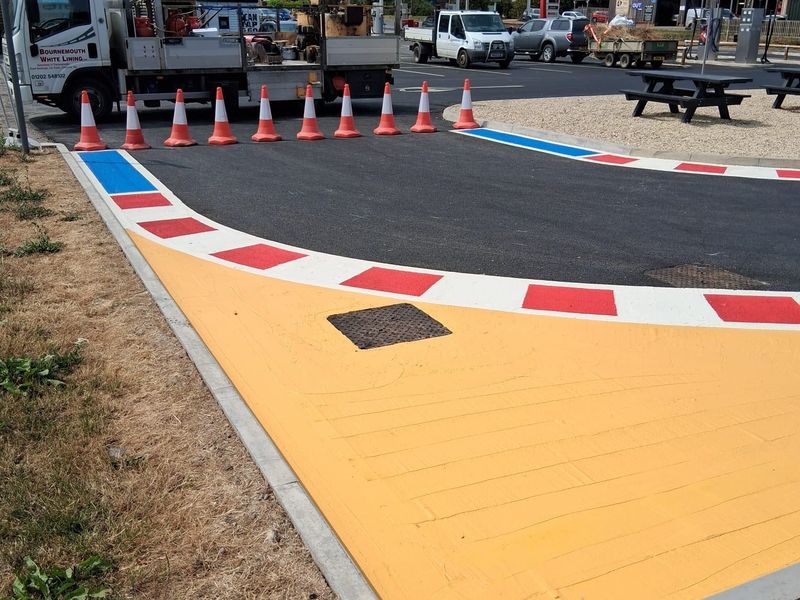
Riverside Garage, West Stour
A coloured racetrack with red and white kerb markings, road edge markings and grid line-up markings.
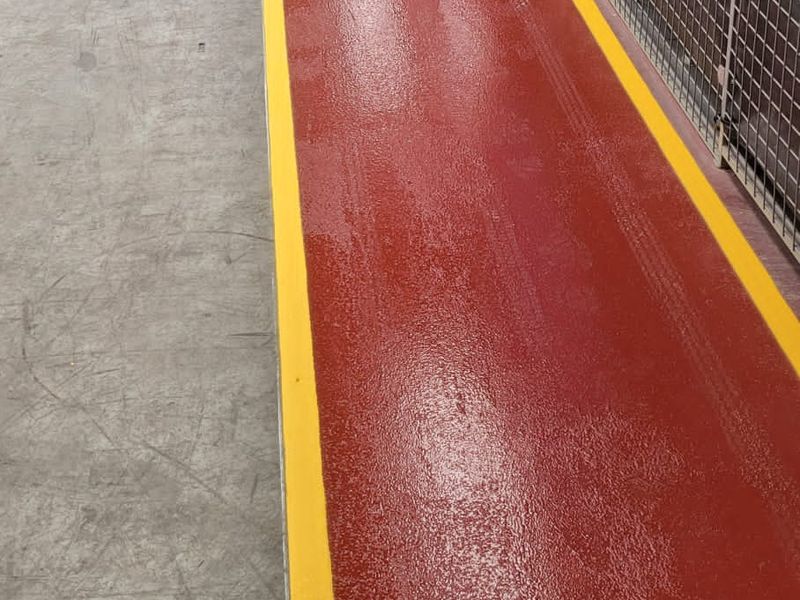
Tidworth Barracks
Internal floor painting, with a red walkway and yellow edge lines.
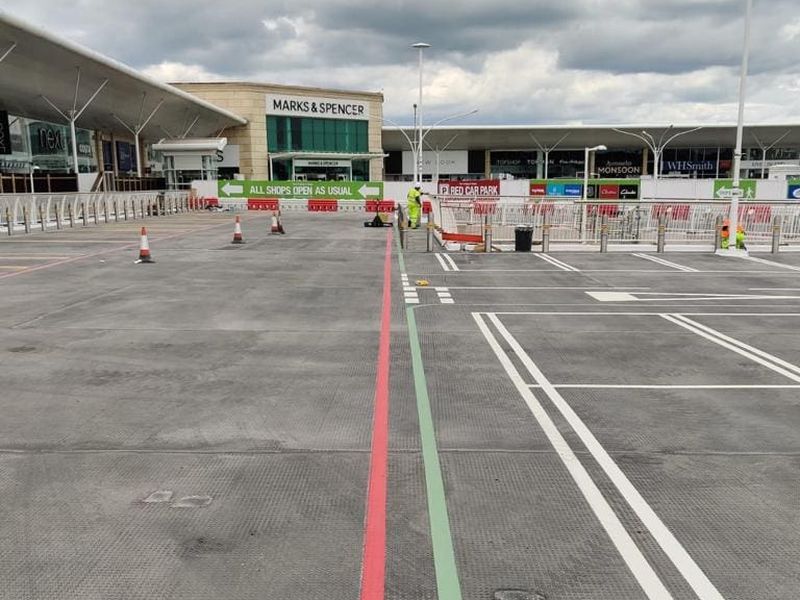
Kier at Castlepoint, Bournemouth
Parking bays, disabled bays, coloured walkways, a red fire route, arrows and hatching.
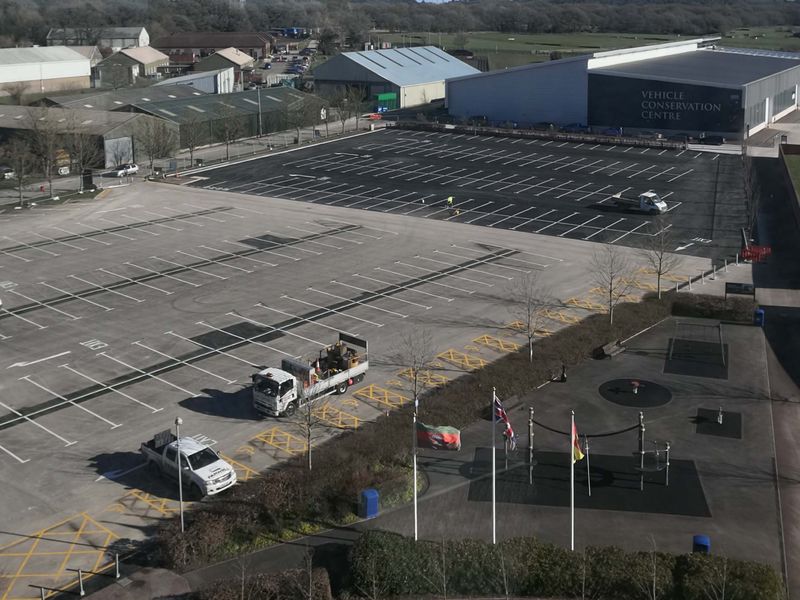
The Tank Museum, Bovington
240 parking bays, 15 disabled bays, double yellow lines, arrows and hatching.
Why choose Bournemouth White Lining
- More than 25 years of line marking in Bournemouth and the surrounding counties
- Markings that meet UK requirements, including the Traffic Signs Regulations and General Directions (TSRGD) and British Standards BS EN 1436 and BS EN 1871
- Accreditations including CHAS, Constructionline, Safecontractor, SMAS and ISO 9001
- Clients including Bournemouth Airport, AFC Bournemouth, Tesco, Marks & Spencer and Morgan Sindall
- Road studs and line markings set out together by the same team
We're based in Throop, Bournemouth, and cover Poole, Dorset, Hampshire, Wiltshire and Somerset, including Weymouth, Southampton, Salisbury, Portsmouth and Yeovil.
NEED ROAD STUDS FITTED?
Road stud questions
What are road studs?
Small markers set into or onto the road, often called cat's eyes, that light up in headlights. They show where lanes and edges are at night and in rain, and drivers feel them if they drift over a line.
What do the different colours of road studs mean?
Under rule 132 of the Highway Code, white studs mark lanes or the middle of the road, red the left edge, amber the central reservation of a dual carriageway or motorway, and green the edge of the main carriageway at lay-bys and slip roads. Green and yellow studs show temporary lane changes.
What is the difference between reflective and solar road studs?
Reflective studs bounce headlight beams back to the driver and need no power. Solar studs charge in daylight and light up on their own after dark, so they can be seen before headlights reach them.
Will road studs cause problems for cyclists or wheelchairs?
When they are specified and sited correctly, no. Low-profile or flush-mounted studs are used where cyclists, wheelchairs or pedestrians cross the line.
Can you fit road studs on a private road or car park?
Yes. We fit studs on access roads, estate roads and car parks, usually alongside new line markings so the job is done in one visit.
Which areas do you cover?
We're based in Bournemouth and cover Poole, Dorset, Hampshire, Wiltshire and Somerset, including Weymouth, Southampton, Salisbury, Portsmouth and Yeovil.